
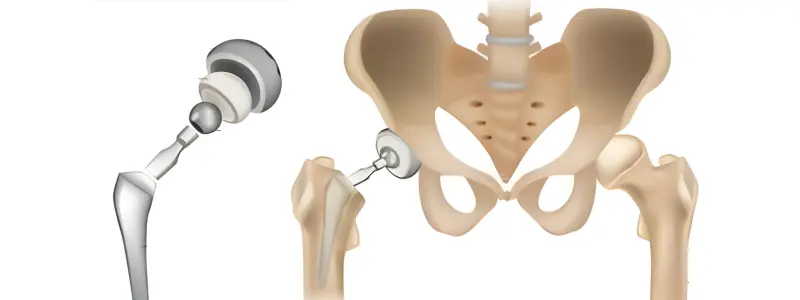
Hip replacement (hip arthroplasty) is an operation in which a damaged hip joint is replaced with an artificial joint (an implant). It is done mainly for advanced arthritis, avascular necrosis and some hip fractures, when pain and stiffness limit daily life and other treatments no longer help.
There are three main types: total hip replacement, partial hip replacement (hemiarthroplasty) and revision hip replacement. The right option depends on the cause of the problem, the condition of the socket and bone, and the patient's age, health and activity level.
PMG Hospital (PMG Orthopedic Hospital), Gota, is an orthopedic hospital for hip replacement in Ahmedabad, where total, partial and revision hip replacement are performed. This page explains when hip replacement is needed, the types of surgery, the procedure, recovery, hip precautions, risks and cost factors.
What Is Hip Replacement?
The hip is a ball-and-socket joint. The ball is the head of the thigh bone (femoral head), and the socket (acetabulum) is part of the pelvis. Smooth cartilage covers both surfaces. When the cartilage wears away or the ball is damaged, the joint becomes painful and stiff.
In a total hip replacement, the damaged ball is removed and replaced with a metal stem fixed into the thigh bone, topped with a metal or ceramic ball. The socket is lined with a cup - usually a metal shell holding a plastic or ceramic liner, or a plastic cup fixed with bone cement. Together, these parts allow smooth movement.
Types of Hip Replacement
| Type | What is replaced | Usually considered for |
|---|---|---|
| Total hip replacement | Both the ball and the socket | Arthritis or avascular necrosis affecting the joint; the most common type |
| Partial hip replacement (hemiarthroplasty) | Only the ball; the natural socket is kept | Some hip fractures (displaced femoral neck fractures) in which the socket is healthy, mainly in older patients |
| Revision hip replacement | An earlier hip implant is removed or corrected and replaced | A worn, loose, unstable or infected earlier hip replacement |
Related pages: Total hip replacement·Partial hip replacement·Revision hip replacement
When Is Hip Replacement Needed?
| Cause | What happens |
|---|---|
| Osteoarthritis | Gradual wear of the joint cartilage; the most common reason |
| Avascular necrosis (osteonecrosis) | Loss of blood supply to the ball, which weakens and collapses; often affects younger adults, and is linked to steroid use and heavy alcohol use |
| Rheumatoid arthritis and other inflammatory arthritis | Inflammation that damages the joint |
| Arthritis after injury | Arthritis that develops after an earlier fracture or injury of the hip |
| Developmental hip problems | A shallow socket (hip dysplasia) or childhood hip conditions that lead to early arthritis |
| Hip fracture | A break near the ball of the thigh bone, especially in older adults, which may need partial or total replacement |
Signs That It May Be Time for an Assessment
- Pain in the hip or groin that limits walking, climbing stairs or getting up from a chair
- Difficulty putting on socks or shoes, or cutting toenails
- Pain at rest or at night
- Stiffness, a limp, or a leg that seems shorter
- Pain that affects work, sleep or independence
Treatment Before Surgery
Unless there is a fracture, hip replacement is usually advised only after other treatments have been tried, such as:
- Weight reduction when needed, and regular low-impact exercise
- Physiotherapy to strengthen the hip and thigh muscles
- Pain-relief medicines, used as advised by a doctor
- A walking stick held in the opposite hand, and changes to daily activities
- Joint injections in selected patients, which may give temporary relief
A hip replacement treatment hospital in Ahmedabad should provide these non-surgical treatments as well as surgery, because not every painful hip needs an operation.
Assessment Before Surgery
A hip replacement doctor in Ahmedabad - an orthopaedic surgeon - assesses the hip before advising surgery:
- 1History and examination: pain, walking distance, range of movement, leg length, and the spine and knee, which can also cause pain felt around the hip
- 2X-rays of the pelvis and hip: to see the joint, the bone quality and the shape of the hip
- 3MRI or other scans: in selected cases, for example in early avascular necrosis
- 4Fitness for surgery: blood tests, ECG, blood sugar and blood pressure control, and checks of the heart, lungs and kidneys as needed
- 5Infection check: any skin, dental or urinary infection is treated before surgery
- 6Medicines: blood thinners and some other medicines may need to be stopped or changed, only as advised by the doctor
Hip Replacement Surgery in Ahmedabad: Step by Step
The main steps are similar in any hip replacement surgery hospital in Ahmedabad:
- 1Anaesthesia: usually spinal anaesthesia (numbing the lower body), sometimes with a nerve block; general anaesthesia is used in some patients
- 2Approach: the hip is reached through a cut at the back, side or front of the hip; the approach is chosen according to the patient and the surgeon's practice
- 3Preparing the bone: the damaged ball is removed and, in a total hip replacement, the socket is prepared for the cup
- 4Fitting the implant: the stem, ball and, in a total hip replacement, the cup and liner are fixed, with or without bone cement, and the hip is checked for stability and leg length
- 5Closure: the muscles and skin are closed and dressed
- 6Duration: the operation usually takes about one to two hours, depending on the case
Recovery After Hip Replacement
| Time | What usually happens |
|---|---|
| Day of surgery or next day | Standing and first steps with a walker and the physiotherapist |
| First few days | Pain control, exercises, walking with support; discharge when safe |
| Weeks 1–2 | Walking with support, wound care, stitches or staples removed when the wound has healed |
| Weeks 3–6 | Less need for support, home exercises, light daily activities |
| Around 6 weeks | Driving, once the surgeon allows it |
| 3–6 months | Strength and stamina continue to improve |
This is a general guide. Recovery is slower after revision surgery, after a hip fracture in an older person, or when both hips are replaced.
Hip Precautions
For the first several weeks, some precautions may be advised to reduce the risk of dislocation. They depend on the surgical approach and the surgeon's advice, and may include:
- Not bending the hip beyond a right angle (90 degrees)
- Not crossing the legs
- Not turning the operated leg inward while bending
- Using a raised toilet seat and avoiding low chairs
- Using a reaching aid instead of bending to pick things up
- Sleeping with a pillow between the knees, if advised
Blood-thinning medicines, leg exercises and early walking help to prevent blood clots. A physiotherapist teaches a home exercise programme to strengthen the muscles around the hip.
How Long Does a Hip Replacement Last?
Large joint registry studies show that most total hip replacements are still in place without needing further surgery 15 to 20 years after surgery. How long an implant lasts depends on age, weight, activity level, bone quality and the type of implant. Over time, the liner can wear or the implant can loosen, and revision surgery may then be needed. Regular follow-up visits help to detect problems early.
Source: Evans JT et al. How long does a hip replacement last? The Lancet. 2019;393:647–654.
Risks and Possible Complications
Hip replacement is a common operation, but no surgery is without risk. The surgeon explains these risks before taking consent.
- Infection of the wound or around the implant, which may need further surgery
- Blood clots in the leg veins (deep vein thrombosis) or lungs (pulmonary embolism)
- Dislocation of the new hip, most often in the first few months
- Difference in leg length
- Injury to nerves or blood vessels, which is rare; the sciatic nerve is the nerve most at risk
- Fracture of the bone around the implant during or after surgery
- Loosening or wear of the implant over time, which may need revision surgery
- Extra bone formation in the muscles around the hip (heterotopic ossification), which can cause stiffness
- Continuing pain or a limp in some patients
- Anaesthesia-related and general medical risks, such as heart, lung or kidney problems, especially in older patients or those with other illnesses
Hip Replacement Surgery Hospital in Ahmedabad
When choosing a hip replacement hospital in Ahmedabad, check that the treating surgeon is a qualified orthopaedic surgeon with valid medical council registration, that the hospital regularly performs this operation, how infection is prevented, which implants and tests are available, what physiotherapy and follow-up are provided, and what the written estimate includes.
Look beyond general phrases such as "a hip replacement hospital with modern facilities" and ask which facilities are actually available on site.
Hip Replacement Surgery Cost in Ahmedabad
- Total, partial or revision surgery
- The implant and bearing surface chosen
- One hip or both hips
- Length of hospital stay and room category
- Other medical conditions and any extra care needed
- Physiotherapy and follow-up
A written, itemised estimate can be requested from the hospital after assessment.
Insurance
- Medically necessary hip replacement is generally covered under health insurance policies, subject to policy terms, waiting periods and insurer approval
- Some policies have limits on room rent or implant costs; check these with your insurer before surgery
- Ask the hospital whether cashless treatment is available with your insurer, and which documents are needed
Hip Replacement Doctor in Ahmedabad
Hip replacement is advised and performed by an orthopaedic surgeon, usually one who works in joint replacement (arthroplasty). Several other doctors and therapists help before and after the operation:
| Doctor or therapist | Role in hip replacement care |
|---|---|
| Family physician | First assessment of hip pain; helps control diabetes and blood pressure, and refers to an orthopaedic surgeon |
| Orthopaedic surgeon | Confirms the diagnosis, decides whether a total, partial or revision operation is needed, and performs the surgery |
| Radiologist | Performs and reports X-rays and, when needed, MRI or other scans |
| Physician or cardiologist | Checks fitness for surgery when there is heart, lung or kidney disease, or diabetes |
| Anaesthetist | Performs the pre-anaesthesia check-up and gives spinal or general anaesthesia and pain relief |
| Physiotherapist | Starts walking and exercises after surgery and teaches hip precautions |
Hip Replacement Surgery Doctor in Ahmedabad
Before agreeing to an operation, it is reasonable to ask your hip replacement surgery doctor in Ahmedabad a few clear questions. The answers help you understand the plan and give informed consent.
- Which type of hip replacement is advised for me, and why?
- Which implant and bearing surface are planned, and will it be fixed with or without bone cement?
- Which surgical approach will be used, and which precautions will I need afterwards?
- Are my blood sugar, blood pressure and other conditions controlled well enough for surgery?
- If both hips are affected, should they be operated on together or separately?
- How many days will I stay in hospital, and what help will I need at home?
- When can I return to work and driving, and can I sit on the floor or squat later?
- How often will I need follow-up visits and X-rays in the long term?
Hip Replacement Treatment Hospital in Ahmedabad
Hip replacement needs an operation theatre set up for joint replacement, safe anaesthesia and physiotherapy from the first day after surgery. These are the facilities that matter most:
| Facility | Why it matters |
|---|---|
| Operation theatre suitable for joint replacement, with strict infection control | Infection around an implant is a serious complication |
| Anaesthesia services | Needed for spinal or general anaesthesia and pain relief after surgery |
| X-ray and laboratory tests | Used to plan surgery, check the implant position and monitor recovery |
| Blood transfusion support | Some patients need blood after hip replacement |
| Physiotherapy | Walking usually starts on the day of surgery or the next day |
| Access to intensive care | Needed for some high-risk or older patients, and after some revision operations |
| Follow-up arrangements | Regular follow-up helps to detect wear or loosening of the implant early |
The facilities available at PMG Hospital are listed further below on this page.
Treating Surgeon
At PMG Hospital, hip replacement is performed by:
| Detail | Information |
|---|---|
| Name | Dr. Hiren Patel |
| Qualification | MS (Ortho), B.J. Medical College, Ahmedabad |
| Specialty | Orthopaedics |
| Designation | Director & Head Joint Replacement Surgeon, PMG Hospital |
| Registration status | Registered Medical Practitioner |
| Registration number | Gujarat Medical Council Reg. No. G-20583 |
| OPD availability | Monday to Saturday, 10:00 AM - 8:00 PM |
Facilities at PMG Hospital
- Orthopaedic OPD, Monday to Saturday
- Emergency and trauma care, 24×7
- Orthopaedic physiotherapy centre
Frequently Asked Questions
When should I see a doctor about hip replacement?
See an orthopaedic surgeon if hip or groin pain limits walking, climbing stairs, putting on socks or sleeping, if the hip is stiff, or if medicines, exercises and physiotherapy no longer help. A fall followed by hip pain and inability to stand needs emergency care.
What are the types of hip replacement?
Total hip replacement replaces both the ball and the socket and is the most common type. Partial hip replacement (hemiarthroplasty) replaces only the ball and is used mainly for certain hip fractures. Revision hip replacement corrects or replaces an earlier hip replacement that has failed.
What is avascular necrosis of the hip?
Avascular necrosis (osteonecrosis) is loss of blood supply to the ball of the hip, which causes the bone to weaken and collapse. It often affects younger adults, and risk factors include high-dose or long-term steroid use and heavy alcohol use. Early stages may be treated without replacement; advanced collapse with arthritis is usually treated with total hip replacement.
How soon can I walk after hip replacement?
Many patients stand and walk with a walker and the physiotherapist on the day of surgery or the next day. Walking distance and confidence improve over the following weeks with exercises. Recovery differs from person to person.
What precautions should I take after hip replacement?
Precautions depend on the surgical approach and the surgeon's advice. They often include avoiding bending the hip beyond a right angle, crossing the legs and turning the leg inward for the first several weeks, as well as using a raised toilet seat and avoiding low chairs. The surgeon tells you which precautions apply to you and for how long.
How long does a hip replacement last?
Large joint registry studies show that most total hip replacements are still in place without needing further surgery 15 to 20 years after surgery. How long an implant lasts depends on age, weight, activity level, bone quality and the type of implant. Regular follow-up helps detect wear or loosening early.
What are the risks of hip replacement?
Risks include infection, blood clots in the leg or lungs, dislocation, difference in leg length, nerve or blood vessel injury, fracture around the implant, loosening or wear of the implant needing revision surgery, and anaesthesia-related and general medical risks. The surgeon explains how these apply to you before you consent.
What facilities should a hospital have for hip replacement?
It should have an operation theatre suitable for joint replacement with strict infection-control practices, anaesthesia services, X-ray, laboratory tests, blood transfusion support, physiotherapy, access to intensive care for high-risk patients, and arrangements for follow-up.
What decides the cost of hip replacement?
The cost depends on whether it is a total, partial or revision operation, the implant and bearing surface, one hip or both, the length of hospital stay, room category, other medical conditions and physiotherapy. A written, itemised estimate can be requested from the hospital after assessment.
Contact and Location
PMG Hospital
3rd Floor, Athena Avenue, B/H Jaguar Showroom, Nr. Eulogia Inn Hotel, Gota, Ahmedabad, India
- Phone / WhatsApp:
- +91 96627 70141
- OPD:
- Mon – Sat · 10:00 AM – 8:00 PM
- Emergency and trauma care:
- 24×7