
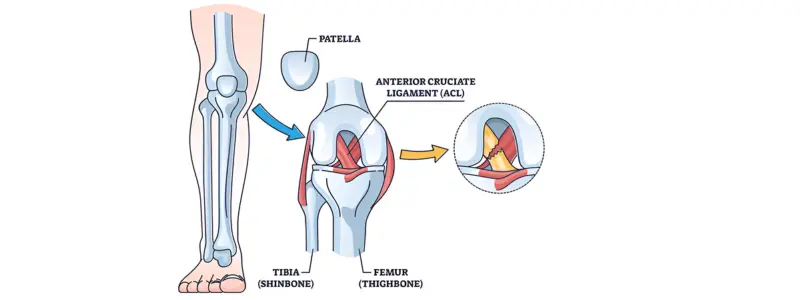
Articular cartilage is the smooth layer that covers the ends of the bones inside a joint and allows them to move easily against each other. It has almost no blood supply, so when it is damaged by an injury, a dislocation or a condition such as osteochondritis dissecans, it usually does not heal well on its own.
Cartilage restoration is a group of procedures used to treat a single, well-defined area of damaged cartilage (a focal defect) in a joint that is otherwise healthy, most often in the knee. The aim is to relieve pain, swelling and catching, and to protect the joint. It is not a treatment for widespread arthritis.
At PMG Hospital, Gota, cartilage restoration procedures for the knee are performed; the assessment and many of the procedures are done arthroscopically (keyhole surgery). This page explains cartilage damage, who may be suitable, the techniques, the procedure, recovery, risks and cost factors.
Why Damaged Cartilage Does Not Heal
Most tissues heal with the help of cells and nutrients carried in the blood. Joint cartilage has almost no blood supply, so damage to it does not repair itself the way skin or bone does. Some cartilage defects cause few symptoms, while others cause pain, swelling or catching, and the edges of a defect may break down further over time.
Common causes of a focal cartilage defect include a twisting injury, a kneecap dislocation, a direct blow to the knee and osteochondritis dissecans, a condition in which a small area of bone and the cartilage over it lose their blood supply. In children and teenagers whose bones are still growing, a stable area of osteochondritis dissecans often heals with rest and changes to activities.
Who May Be Suitable for Cartilage Restoration?
| Usually suitable | Usually not suitable |
|---|---|
| Younger, active adults | Widespread arthritis or "bone-on-bone" changes |
| A single, well-defined defect seen on MRI or during arthroscopy | Many areas of damage |
| Pain, swelling or catching that continues despite physiotherapy | Few symptoms |
| A stable, well-aligned knee, or instability or poor alignment that can be corrected at the same time | Excess body weight, smoking, a missing meniscus or other factors that put the repair at high risk, until these are addressed |
Cartilage problems related to an unstable knee or poor leg alignment are often treated together with a ligament reconstruction or a bone realignment operation (osteotomy), which is done through an open cut. When the damage is widespread, cartilage restoration is not helpful, and other treatments or, later, joint replacement are considered.
Treatment Before Surgery
Many cartilage problems are treated first with physiotherapy to strengthen the thigh and hip muscles, weight control when needed, changes to activities and pain-relief medicines used as advised by a doctor. A cartilage restoration treatment hospital in Ahmedabad should provide these non-surgical treatments as well as surgery.
Assessment Before Surgery
A cartilage restoration doctor in Ahmedabad - an orthopaedic surgeon - assesses the knee before advising surgery:
- 1History and examination: symptoms, previous injuries, stability of the knee, and alignment of the leg
- 2X-rays: including standing X-rays, and sometimes long-leg X-rays to check alignment
- 3MRI: to show the size, depth and position of the defect and the condition of the rest of the knee
- 4Arthroscopy: sometimes used to confirm the size and depth of the defect before the final treatment is chosen
Knee Cartilage Treatment in Ahmedabad: Techniques
| Technique | What is done | Usually considered for |
|---|---|---|
| Debridement | Loose flaps of cartilage are trimmed and the edges smoothed | Loose flaps that catch; symptom relief |
| Fixation of a loose fragment | A loose piece of cartilage and bone, often from osteochondritis dissecans, is fixed back in place with small pins or screws | Large, unstable fragments that are in good condition |
| Microfracture (marrow stimulation) | Small holes are made in the bone under the defect, so that marrow cells can form repair tissue | Small defects |
| Osteochondral autograft (OATS) or mosaicplasty | Small plugs of healthy cartilage and bone are moved from an area of the knee that carries less load into the defect | Small to medium defects, including some with damage to the bone underneath |
| Cell-based techniques (autologous chondrocyte implantation) | The patient's own cartilage cells are taken during a first operation, grown in a laboratory and implanted during a second operation | Larger defects, in selected patients and at centres where the technique is available |
Microfracture and debridement are usually done arthroscopically. Osteochondral grafting can be done arthroscopically or through a small open cut, and cell implantation usually needs a small open cut. The technique is chosen according to the size, depth and position of the defect and the patient's age and activity level.
Cartilage Restoration Surgery in Ahmedabad: Step by Step
The main steps are similar in any cartilage restoration surgery hospital in Ahmedabad:
- 1Anaesthesia: spinal or general anaesthesia
- 2Arthroscopy: the knee is inspected with a camera to confirm the size and depth of the defect and to check the rest of the joint
- 3Treatment of the defect: the chosen technique is carried out arthroscopically or through a small open cut
- 4Other procedures: a ligament reconstruction or bone realignment may be done at the same time, when needed
- 5Closure: the cuts are closed and dressed, and a brace may be used
Recovery After Cartilage Restoration
| Time | What usually happens |
|---|---|
| First weeks | Weight on the leg is usually limited, often for about six weeks, depending on the technique and position of the defect; early guided movement of the knee |
| Months 2–4 | Gradual increase in weight-bearing and strengthening as the repair tissue matures |
| About 6–12 months or longer | Return to running and impact activities, depending on the technique and the position of the defect |
The repair tissue needs many months to mature. Too much load too early can damage it, so the physiotherapy programme is followed step by step.
Risks and Possible Complications
Cartilage restoration is a specialised operation, and no surgery is without risk. The surgeon explains these risks before taking consent.
- Infection of the wound or inside the joint, which is uncommon but may need further surgery
- Bleeding into the joint (haemarthrosis) or swelling that takes time to settle
- Blood clots in the leg veins (deep vein thrombosis) or lungs (pulmonary embolism)
- Stiffness or loss of movement
- Numbness of the skin around the incisions
- Injury to nerves or blood vessels, which is rare
- Continuing pain in some patients
- Anaesthesia-related and general medical risks
- Failure of the repair or continuing symptoms, which may need further surgery
- Pain or problems at the area from which grafts were taken
- Arthritis, which may still develop later in life
Cartilage Restoration Surgery Hospital in Ahmedabad
When choosing a cartilage restoration hospital in Ahmedabad, check that the treating surgeon is a qualified orthopaedic surgeon with valid medical council registration, that the hospital regularly performs this operation, how infection is prevented, which cartilage restoration techniques, implants and tests are available, what physiotherapy and follow-up are provided, and what the written estimate includes.
Look beyond general phrases such as "a cartilage restoration hospital with modern facilities" and ask which facilities are actually available on site.
Cartilage Restoration Surgery Cost in Ahmedabad
- The technique used
- Any other procedures, such as ligament reconstruction or bone realignment
- Length of hospital stay and room category
- The brace, physiotherapy and follow-up
A written, itemised estimate can be requested from the hospital after assessment. Insurance cover may differ between techniques, so check your policy.
Insurance
- Medically necessary cartilage restoration surgery is generally covered under health insurance policies, subject to policy terms, waiting periods and insurer approval
- Some policies have limits on room rent or implant costs; check these with your insurer before surgery
- Ask the hospital whether cashless treatment is available with your insurer, and which documents are needed
Cartilage Restoration Doctor in Ahmedabad
Cartilage damage in the knee is assessed and treated by an orthopaedic surgeon, usually one who performs knee arthroscopy and cartilage surgery. A family physician may see the knee pain first, but the decision about cartilage restoration is made by the orthopaedic surgeon after examination, X-rays and an MRI. Different professionals are involved at different stages:
| Doctor or therapist | Role in cartilage care |
|---|---|
| Family physician | First examination of knee pain or swelling; refers to an orthopaedic surgeon when symptoms continue |
| Orthopaedic surgeon (knee arthroscopy and cartilage surgery) | Assesses the defect, stability and alignment of the knee, chooses the technique, and performs the operation |
| Radiologist | Performs and reports the X-rays, long-leg X-rays and MRI |
| Anaesthetist | Checks fitness for surgery and gives spinal or general anaesthesia |
| Physiotherapist | Guides strengthening before surgery and the long, protected rehabilitation after it |
Cartilage Restoration Surgery Doctor in Ahmedabad
Before agreeing to the operation, it is reasonable to ask your cartilage restoration surgery doctor in Ahmedabad a few clear questions about your own knee. The answers help you understand the plan and give informed consent.
- How large and deep is my cartilage defect, and is the rest of my knee healthy?
- Is my knee stable and my leg well aligned, or will these need treatment at the same time?
- Which technique do you suggest for my defect, and why?
- Will the operation be arthroscopic, or will a small open cut be needed?
- What can I do before surgery, such as physiotherapy or weight control, to prepare the knee?
- How long will weight on the leg be limited, and will I need crutches or a brace?
- When can I return to work, running or sport?
- If the repair does not relieve my symptoms, what options would remain?
Cartilage Restoration Treatment Hospital in Ahmedabad
Cartilage restoration needs careful selection, surgery matched to the defect and long, protected rehabilitation, so the hospital should support each stage. These are the facilities that matter most:
| Facility | Why it matters |
|---|---|
| Orthopaedic OPD and X-ray, including standing X-rays | Examination, and assessment of the joint space and leg alignment |
| Access to MRI | Shows the size, depth and position of the defect and the condition of the rest of the knee |
| Operation theatre for arthroscopic and open knee surgery, with infection-control practices | Some techniques need a small open cut, and infection inside the joint is serious |
| Arthroscopy equipment, instruments and implants for the planned technique | Needed for marrow stimulation, grafting or fixation of a loose fragment |
| Anaesthesia services | Spinal or general anaesthesia, and pain relief |
| Physiotherapy service | Supports the months of protected weight-bearing and strengthening |
The facilities available at PMG Hospital are listed further below on this page.
Treating Surgeon
At PMG Hospital, cartilage restoration surgery is performed by:
| Detail | Information |
|---|---|
| Name | Dr. Hiren Patel |
| Qualification | MS (Ortho), B.J. Medical College, Ahmedabad |
| Specialty | Orthopaedics |
| Designation | Director & Head Joint Replacement Surgeon, PMG Hospital |
| Registration status | Registered Medical Practitioner |
| Registration number | Gujarat Medical Council Reg. No. G-20583 |
| OPD availability | Monday to Saturday, 10:00 AM - 8:00 PM |
Facilities at PMG Hospital
- Orthopaedic OPD, Monday to Saturday
- Emergency and trauma care, 24×7
- Orthopaedic physiotherapy centre
Frequently Asked Questions
Can knee cartilage heal on its own?
Usually not. Joint cartilage has almost no blood supply, so damage to it does not heal the way skin or bone does. Some cartilage problems cause few symptoms, while others cause pain, swelling or catching and may slowly get worse.
What is cartilage restoration?
Cartilage restoration is a group of procedures used to treat a single, well-defined area of damaged joint cartilage (a focal defect) in a joint that is otherwise healthy. The aim is to relieve symptoms and protect the joint. It is different from the treatment of widespread arthritis.
Who may be suitable for cartilage restoration?
It is usually considered for younger, active adults with a single, well-defined cartilage defect that causes pain, swelling or catching despite physiotherapy, in a knee that is stable and well aligned or in which instability or poor alignment can be corrected at the same time. It is not suitable for widespread arthritis.
What are the main cartilage restoration techniques?
The main techniques are trimming and smoothing loose flaps of cartilage (debridement), microfracture or similar marrow stimulation, fixing a loose fragment back in place, and moving small plugs of cartilage and bone from an area of the knee that carries less load (osteochondral autograft or mosaicplasty). Cell-based techniques, in which the patient's own cartilage cells are grown in a laboratory and implanted, are used in selected patients at some centres. The choice depends on the size, depth and position of the defect.
Is cartilage restoration the same as knee replacement?
No. Cartilage restoration treats a small area of damage in a knee that is otherwise healthy, usually in younger patients. Knee replacement replaces the worn surfaces of a knee affected by widespread arthritis.
How long does recovery take after cartilage restoration?
Recovery takes time, because the repair tissue needs months to mature. Weight on the leg is usually limited for several weeks, with early guided movement. A return to running and impact sports usually takes about six months to a year or longer, depending on the technique and the position of the defect.
What facilities should a hospital have for cartilage restoration?
It should have an operation theatre suitable for arthroscopic and open knee surgery with strict infection-control practices, arthroscopy equipment, the instruments and implants for the planned technique, access to MRI, and a physiotherapy service for long, protected rehabilitation.
What decides the cost of cartilage restoration?
The cost depends on the technique, any other procedures such as ligament surgery or bone realignment, the length of hospital stay, room category and physiotherapy. Insurance cover may differ between techniques, so check your policy. A written, itemised estimate can be requested from the hospital after assessment.
Contact and Location
PMG Hospital
3rd Floor, Athena Avenue, B/H Jaguar Showroom, Nr. Eulogia Inn Hotel, Gota, Ahmedabad, India
- Phone / WhatsApp:
- +91 96627 70141
- OPD:
- Mon – Sat · 10:00 AM – 8:00 PM
- Emergency and trauma care:
- 24×7