

A phone call comes in the evening. Your mother has slipped in the bathroom and can't stand up. She says her hip hurts, and now everyone at home is asking the same question: should we wait and see, or go to the hospital right now?
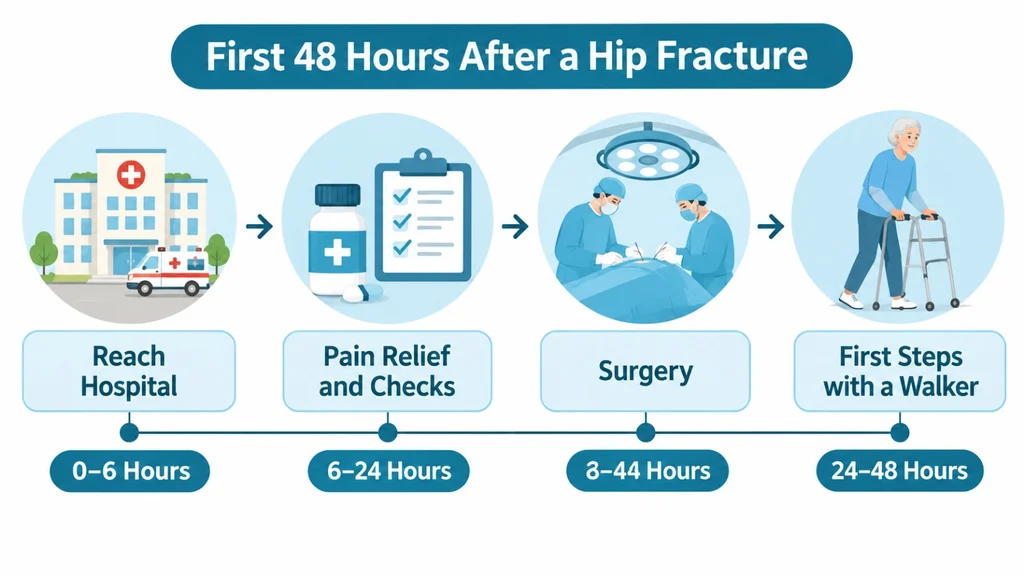
If a hip fracture is likely, don't wait. Doctors generally aim to operate as early as possible once the patient is medically fit, often within a day or two.
This article explains why timing matters, what happens in those first hours, and how you can help your parents through it.
What Is a Hip Fracture?
A hip fracture is a break in the top part of the thigh bone, close to the hip joint. In older adults, it most often follows a simple fall at home, because bones weaken with age. The most common type is a break just below the ball of the hip, called a femoral neck fracture.
It's a serious injury, but it's treatable. Surgery is the usual treatment, and in many older patients it involves replacing the broken ball, which is called a partial hip replacement. You can read about it on our page for partial hip replacement surgery in Ahmedabad.
Signs Your Parent May Have a Broken Hip
A hip fracture isn't always dramatic. Some people can still move the leg a little, so the injury gets underestimated. Watch for these signs after a fall.
| What you notice | What to do |
|---|---|
| Pain in the hip or groin after a fall | Don't wait, get urgent medical help |
| Can't stand or walk | Don't try to make them walk, call for help |
| Leg looks shorter or turned outward | Treat as a possible fracture, go to emergency care |
| Swelling or bruising around the hip | Get an examination and an X-ray |
Even if your parents can bear some weight, a fracture is still possible, and an X-ray is the only way to be sure. If you notice any of these, call 108 or go to the nearest emergency facility. Don't try to move your parents yourself, and don't wait for the pain to settle.
Why Early Surgery Matters
When an older person with a broken hip stays in bed waiting, the fracture isn't the only problem. Lying still for long causes its own trouble: chest infections, pressure sores, weakness and confusion. Early surgery lets the patient sit up, stand and start moving sooner.
Team-based care helps too. The same guideline strongly supports involving geriatric, orthopaedic, nursing, diet and rehabilitation staff from the day of admission. Research supports early surgery as well. The American Academy of Orthopaedic Surgeons updated its hip fracture guideline in December 2021 and found strong evidence for operating within roughly 24 to 48 hours of the fracture. A large review in the CMAJ pooled 16 studies of patients aged 60 and older and found that early surgery was linked with a lower risk of death and fewer complications.
| What studies linked to early surgery | Result |
|---|---|
| Risk of death (adjusted analysis) | About 19% lower |
| Pneumonia | About 41% lower (unadjusted) |
| Pressure sores | About 52% lower (unadjusted) |
| Blood clots in the legs or lungs | No clear difference |
These studies were observational, so they show an association rather than proof, and the effect was smaller after adjusting for other factors. Still, the direction was consistent, and it matches what doctors see in practice.
Why "a Day or Two" and Not "Right Now"?
You might wonder why surgery isn't done within minutes. The reason is safety. Before operating, the team needs your parents to be medically fit. On arrival, staff start pain relief and fluids, and they correct problems such as a low blood count, dehydration or uncontrolled blood sugar.
Older patients often have other conditions, such as diabetes, heart disease or kidney problems. A short period of preparation lowers the risks of surgery. So the aim is early surgery, ideally on the day of admission or the next day, but only once your parents are fit for it.
What Happens in the Operation?
The treatment depends on the type of fracture, your parent's health and how active they were before the fall.
| Type of fracture | What usually happens |
|---|---|
| Displaced neck fracture, ends have moved apart | Partial hip replacement, since the blood supply to the ball is often damaged |
| Undisplaced neck fracture | Often fixed with screws |
| Lower fracture (intertrochanteric) | Usually fixed with a nail or plate |
For a displaced neck fracture, a partial hip replacement suits many older or less active patients with a healthy socket. A total hip replacement may be advised for fit patients who walked independently, or when the socket is arthritic. You can read more about total hip replacement surgery in Ahmedabad and about hip trauma surgery in Ahmedabad.
A partial replacement is a shorter operation than a total one, which is one reason it's often chosen for older or frailer patients. The operation usually takes about one to two hours. Anaesthesia is most often spinal, which numbs the lower body, often with a nerve block for pain relief. Some patients need general anaesthesia instead.
How You Can Help in the First Few Hours
Families often feel helpless, but there's a lot you can do:
- Call 108 or go to emergency care, and keep your parent still and supported
- Carry their medicine list, recent reports and any insurance papers
- Tell the doctors about diabetes, blood thinners, heart problems and allergies
- Ask the staff before giving food or water, since surgery may need an empty stomach
- Stay calm and stay close, because familiar faces reduce fear and confusion
Confusion, called delirium, is a real risk for older patients after a fall and surgery, so having family nearby helps. Be honest with the surgeon, too. The risk to life is higher in frail patients with other illnesses, and a good doctor will explain this openly and weigh it against the risks of waiting.
If you have questions about your parent's hip, you can book a consultation with the team at PMG Hospital, or WhatsApp +91 96627 70141. Emergency and trauma care is available 24×7.
What Recovery Looks Like
Recovery starts almost immediately, and it depends largely on how well your parents walked and how healthy they were before the fracture.
- Days 1 to 2: standing and first steps with a walker and a physiotherapist
- First week: walking with a walker, then discharge once it's safe
- Weeks 2 to 6: physiotherapy and growing independence
- Weeks 6 to 12: a return toward pre-fracture activity
- Several months: further improvement, depending on age and health
Regular rehabilitation matters a great deal, and PMG Hospital has an orthopaedic physiotherapy centre in Gota to support this stage. For more on blood clot risk after hip surgery, read our article on preventing blood clots after hip replacement, and for how fractures lead to replacement, see hip replacement after fracture.
Once your parents are stronger, ask the doctor about testing for osteoporosis, checking eyesight and medicines that cause dizziness, and making the home safer. These steps lower the chance of another fall and another fracture.
Frequently Asked Questions
What are the signs of a broken hip after a fall?
Hip or groin pain after a fall, being unable to stand or walk, and a leg that looks shorter or turned outward are the main signs. These need emergency care.
How soon should hip fracture surgery be done?
As early as possible, ideally on the day of admission or the next day, once the patient is medically fit. Guidelines point to roughly 24 to 48 hours.
What if my parents aren't medically fit right away?
The team first corrects problems such as a low blood count, dehydration or uncontrolled blood sugar, then operates. This short preparation helps make surgery safer.
Is hip fracture surgery risky for a very old parent?
There are real risks, including confusion, infection and heart or lung problems, and the risk to life is higher in frail patients with other illnesses. The surgeon will weigh these against the risks of not operating.
How long does recovery take after hip fracture surgery?
Most patients stand and take first steps within one or two days. Return toward earlier activity usually takes about 6 to 12 weeks, and further improvement can continue for several months.
Conclusion
When an elderly parent breaks a hip, time matters. Surgery within a day or two, once your parent is medically fit, helps them get moving sooner and is linked with fewer complications. Acting quickly, sharing the full medical history and staying close all make a difference.
Don't be afraid to ask the surgeon questions about the fracture, the operation and the recovery. If your family is dealing with a hip injury and needs clear guidance, the team at PMG Hospital is ready to help you decide the next step with care and respect for your parents.