
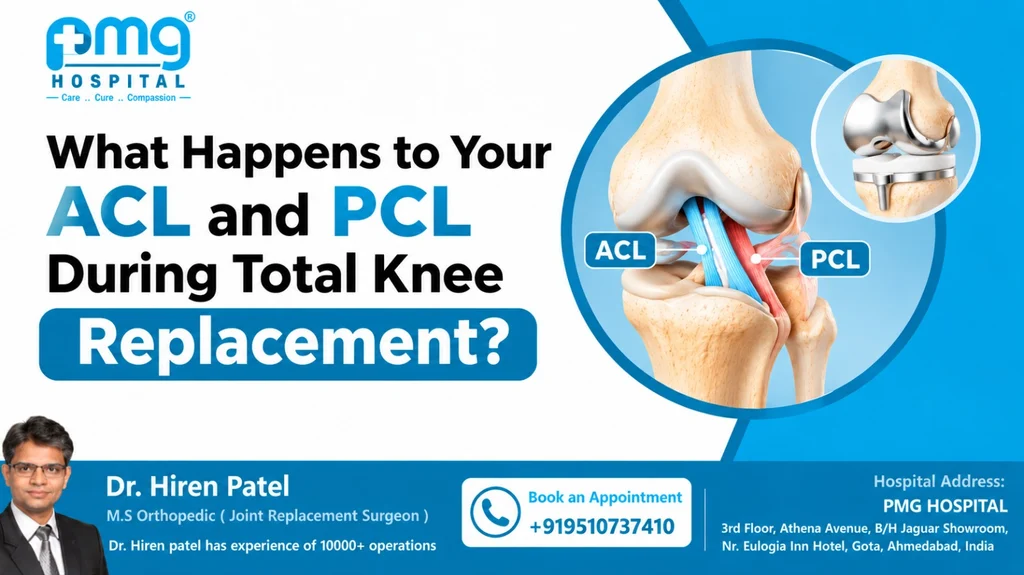
You've probably heard that knee replacement means swapping the worn surfaces of your knee for metal and plastic. But what about the ligaments inside the knee? Many patients quietly worry that something important will be cut out and the knee will feel loose afterwards.
It's a fair concern, and it's one of the most common questions people ask their surgeon. Two ligaments in particular raise it: the ACL and the PCL.
This article explains what happens to each of them, why implants are designed the way they are, and what to ask before your operation.
What Is Total Knee Replacement?
Your knee has three compartments: the inner side, the outer side and the part behind the kneecap. In a total knee replacement, the damaged surfaces of the joint are replaced with metal parts on the thigh bone and shin bone, and a plastic insert between them so the joint glides smoothly. The back of the kneecap may be resurfaced too.
It's usually advised when arthritis affects more than one compartment, or when the knee is deformed or the ligaments are damaged. If you'd like the full picture, see our page on total knee replacement surgery in Ahmedabad.
A Quick Look at Your Knee Ligaments
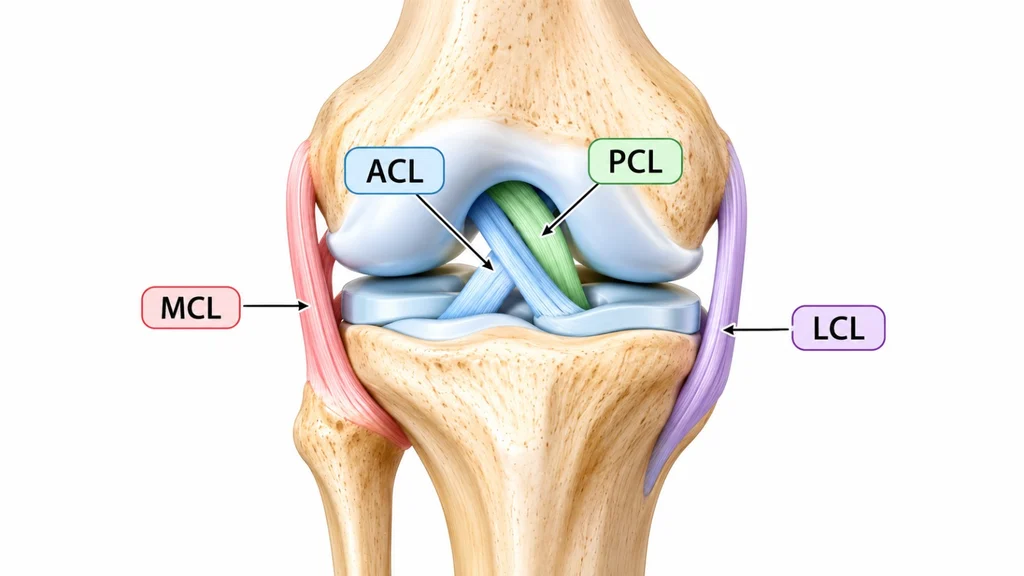
Ligaments are strong bands that hold the thigh bone and shin bone together. The ACL and PCL are called cruciate ligaments because they cross each other in the centre of the knee, like an X. Four ligaments matter most, and they don't all get the same treatment during surgery.
| Ligament | What it does | Usually happens in total knee replacement |
|---|---|---|
| ACL (anterior cruciate) | Stops the shin bone from sliding forward | Usually removed |
| PCL (posterior cruciate) | Stops the shin bone from sliding backward | Either kept, or its job is taken over by the implant |
| MCL (inner side ligament) | Steadies the knee from side to side | Kept, and balanced by the surgeon |
| LCL (outer side ligament) | Steadies the knee from side to side | Kept, and balanced by the surgeon |
What Happens to the ACL?
In most total knee replacements, the ACL is removed. That sounds alarming, but there's a good reason. In a knee worn down by arthritis, the ACL is often already thin, stretched or damaged. Standard total knee implants are designed to work without it.
The shape of the metal and plastic parts, together with your remaining ligaments and thigh muscles, give the knee its steadiness. So a knee without an ACL doesn't mean a loose knee, as long as the implant is chosen and positioned well. It's also why a knee that lost its ACL years ago can still be replaced successfully.
What Happens to the PCL?
The PCL is different, because surgeons have two options, and the choice depends on your ligaments and the shape of your knee.
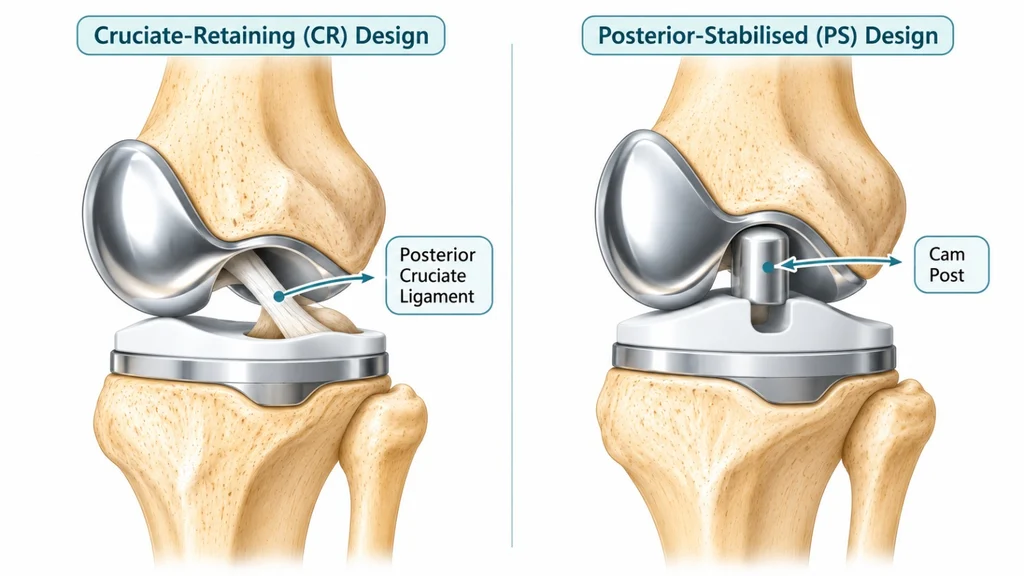
| Design | What happens to the PCL | How the knee stays stable |
|---|---|---|
| Cruciate-retaining | The PCL is kept | Your own PCL controls forward and backward movement |
| Posterior-stabilised | The PCL is removed | The implant has a built-in post-and-cam mechanism that does the PCL's job |
Both designs are widely used. A 2018 paper in SICOT-J notes that long-term results of the two are comparable, and that the retaining design needs less bone to be removed and may keep some of the knee's sense of position. Surgeons often choose the posterior-stabilised design when the PCL is weak or damaged, or when the knee is quite deformed. The final choice is often made once the surgeon can see the ligament during the operation, so it's worth asking about both options beforehand.
Will Your Knee Feel Unstable Without the ACL?
For most patients, no. A well-balanced total knee replacement feels steady, and many people walk, climb stairs and return to daily activities comfortably in the months after surgery.
During surgery, your surgeon checks how tight each side of the knee is and adjusts the cuts and soft tissues so the knee bends and straightens evenly. This step, often called ligament balancing, is as important as the implant itself. Stability comes from several things working together:
- The shape of the implant, which is chosen to match your ligaments and deformity
- Your MCL and LCL, which stay in place and are carefully balanced during surgery
- The strength of your thigh and hip muscles, rebuilt through physiotherapy
- Accurate positioning of the implant, which robotic assistance can help with when it suits your knee
Strength and stamina usually keep improving for three to six months after surgery, so don't judge your knee's steadiness in the first few weeks. Instability is a possible complication of any knee replacement, but it's uncommon when the surgery is planned well. Our blog on how knee alignment shapes knee replacement success explains why positioning matters so much.
What If You Already Had a Torn ACL or PCL?
This is a common situation, especially in people who played sport or had a road accident years ago. The old injury may have sped up wear in the knee, which is why arthritis developed.
A damaged ACL is actually one of the reasons a total replacement is preferred over a partial one, because partial replacement works best when the ligaments are healthy. You can read more in our article on total vs partial knee replacement.
| Your situation | What it may mean |
|---|---|
| Old torn ACL, now arthritis in the knee | Total replacement is usually suitable, and the ACL isn't rebuilt |
| Weak or damaged PCL | A posterior-stabilised design is often chosen |
| Arthritis in one compartment, healthy ligaments | Partial replacement may be possible |
| Ongoing instability with no arthritis | A ligament problem, not a replacement problem |
Notice the last row. If your knee feels loose but the joint surfaces are still healthy, the answer isn't knee replacement at all. In that case, procedures such as ACL reconstruction surgery or PCL reconstruction surgery are the ones to discuss. Our blog on knee instability after ACL tear helps you tell the difference.
Partial Knee Replacement: A Different Story
In a partial knee replacement, only one compartment is replaced, and the cruciate ligaments are usually kept. That's why it suits only people with healthy ligaments and damage limited to one area. If that sounds like you, read about partial knee replacement surgery in Ahmedabad.
Questions to Ask Your Surgeon About Your Ligaments
Before surgery, it helps to go in with a few clear questions:
- Are my ACL and PCL healthy, damaged or missing on my scans?
- Which implant design do you recommend for my knee, and why?
- Will my PCL be kept or replaced by the implant?
- How will you check that the knee feels stable during surgery?
- What would I notice if the knee felt unstable, and what happens then?
At PMG Hospital, Dr. Hiren Patel, the Director and Head Joint Replacement Surgeon, considers ligament stability along with bone quality, age and activity level when choosing an implant. Robotic assistance with the ROSA Knee System is used when it suits the individual knee, and you can read about robotic knee replacement in Ahmedabad for details. If you'd like to talk through your own scans, you can book a consultation with the team.
Frequently Asked Questions
Is the ACL removed in total knee replacement?
In most total knee replacements, yes. Standard implants are designed to work without the ACL, and the knee is kept steady by the implant shape, your other ligaments and your muscles.
Is the PCL removed in knee replacement?
It depends on the design. In a cruciate-retaining knee the PCL is kept, while in a posterior-stabilised knee it is removed and the implant takes over its job.
Which is better, a cruciate-retaining or a posterior-stabilised knee?
Neither is better for everyone. Long-term results are reported to be comparable, so surgeons choose based on your ligaments, the shape of your knee and your own situation.
Can I have a knee replacement with a torn ACL?
Yes. A damaged ACL is one of the reasons a total replacement is preferred over a partial one. The ACL isn't rebuilt during the operation.
Does partial knee replacement keep the ACL and PCL?
Usually yes. Partial replacement replaces only one compartment and normally keeps the cruciate ligaments, which is why it suits patients with healthy ligaments.
Conclusion
So, what happens to your ACL and PCL during total knee replacement? The ACL is usually removed, since modern implants don't depend on it. The PCL is either kept or replaced by the design of the implant, depending on your knee. And your side ligaments stay in place and are balanced so the knee feels steady.
Understanding this takes much of the fear out of surgery. If you're thinking about a total knee replacement and want your ligament questions answered in plain words, the team at PMG Hospital is happy to walk you through your scans and your options.