
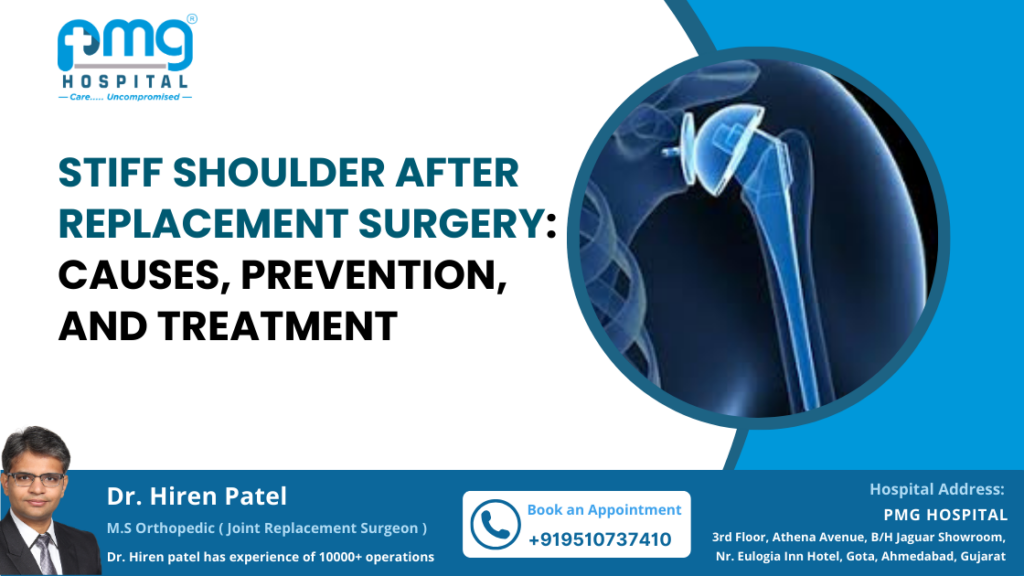
Shoulder replacement surgery is a highly effective procedure for patients suffering from severe shoulder arthritis, fractures, or long-standing joint damage. While the surgery can significantly reduce pain and restore mobility, some patients may experience stiff shoulder after shoulder replacement surgery during the recovery phase. Understanding the causes, prevention methods, and treatment options can help patients achieve a smoother recovery and regain full shoulder movement.
For patients seeking Shoulder Replacement Surgery in Ahmedabad, choosing an experienced specialist is essential. Experts like Dr. Hiren Patel focus on advanced surgical techniques and structured rehabilitation programs to ensure better outcomes for patients.
What is a Stiff Shoulder After Replacement Surgery?
A stiff shoulder after surgery occurs when the joint does not regain its expected range of motion following a shoulder replacement procedure. Patients may find it difficult to lift the arm, rotate the shoulder, or perform daily activities such as dressing, combing hair, or reaching overhead.
Although some stiffness is normal during the early stages of healing, persistent stiffness may require medical attention and proper shoulder stiffness after joint replacement treatment.
Causes of Stiff Shoulder After Shoulder Replacement Surgery
Several factors can contribute to stiff shoulder after shoulder replacement surgery. Understanding these causes can help patients and doctors manage recovery more effectively.
1. Scar Tissue Formation
After surgery, the body naturally forms scar tissue around the joint. Excessive scar tissue can restrict movement and lead to stiffness.
2. Inadequate Post-Surgery Physiotherapy
Rehabilitation exercises are essential for restoring movement. If physiotherapy is delayed or not performed correctly, the shoulder joint may become stiff.
3. Inflammation Around the Joint
Post-surgical swelling or inflammation can temporarily limit the range of motion.
4. Pre-existing Severe Joint Damage
Patients who had limited movement before surgery may take longer to regain flexibility after the procedure.
5. Infection or Complications
In rare cases, infections or other complications may lead to joint stiffness and require immediate medical attention.
Consulting an experienced specialist such as Dr. Hiren Patel helps identify the underlying cause and determine the best treatment plan.
How to Prevent Stiffness After Shoulder Replacement?
Many patients ask how to prevent stiffness after shoulder replacement. Preventive care plays a crucial role in ensuring a successful recovery.
Follow the Physiotherapy Plan
Regular physiotherapy helps maintain flexibility and gradually increases shoulder mobility. Patients should strictly follow the rehabilitation schedule recommended by their surgeon.
Start Gentle Movement Early
Early controlled movements help prevent joint stiffness and improve blood circulation around the surgical site.
Maintain Proper Posture
Poor posture can place unnecessary stress on the shoulder joint and slow recovery.
Avoid Overexertion
While movement is important, excessive strain on the joint can cause inflammation and delay healing.
Regular Follow-Up with Your Surgeon
Routine follow-up visits help monitor progress and address any signs of stiffness early.
Patients undergoing Shoulder Replacement Surgery in Ahmedabad are often guided through personalized rehabilitation programs to minimize complications and ensure a faster recovery.
Shoulder Stiffness After Joint Replacement Treatment
If stiffness develops despite preventive measures, several effective shoulder stiffness after joint replacement treatment options are available.
Physiotherapy and Rehabilitation
Targeted physiotherapy exercises remain the first and most effective treatment. These exercises gradually improve joint flexibility and muscle strength.
Medications
Anti-inflammatory medications may help reduce swelling and discomfort, allowing patients to perform exercises more comfortably.
Joint Mobilization Techniques
Orthopedic specialists may recommend specialized manual therapy techniques to improve joint movement.
Minimally Invasive Procedures
In certain cases where stiffness persists, procedures such as manipulation under anesthesia or arthroscopic release may be considered.
Early diagnosis and treatment significantly improve recovery outcomes.
Importance of Choosing the Right Surgeon
Successful recovery from shoulder replacement surgery depends not only on the procedure but also on post-surgical care and guidance. Selecting the Best Orthopedic Surgeon in Ahmedabad ensures that patients receive comprehensive treatment—from accurate diagnosis to advanced surgical techniques and structured rehabilitation.
Specialists like Dr. Hiren Patel are known for providing patient-focused orthopedic care, especially for complex joint replacement procedures. With extensive experience in Shoulder Replacement Surgery in Ahmedabad, patients receive expert guidance at every stage of treatment and recovery.
When Should You Consult a Doctor?
Patients should seek medical advice if they experience:
- Persistent shoulder stiffness lasting several weeks after surgery
- Severe pain or swelling
- Difficulty performing daily activities
- Reduced range of motion despite physiotherapy
Early consultation with an orthopedic expert can help identify the cause and begin the appropriate shoulder stiffness after joint replacement treatment.
Conclusion
Experiencing stiff shoulder after shoulder replacement surgery can be concerning, but with proper care and rehabilitation, most patients regain excellent shoulder function. Understanding how to prevent stiffness after shoulder replacement and following the recommended recovery plan are key to achieving the best results.
For individuals considering or recovering from Shoulder Replacement Surgery in Ahmedabad, consulting an experienced orthopedic specialist like Dr. Hiren Patel can ensure effective treatment, safer recovery, and improved quality of life.
