
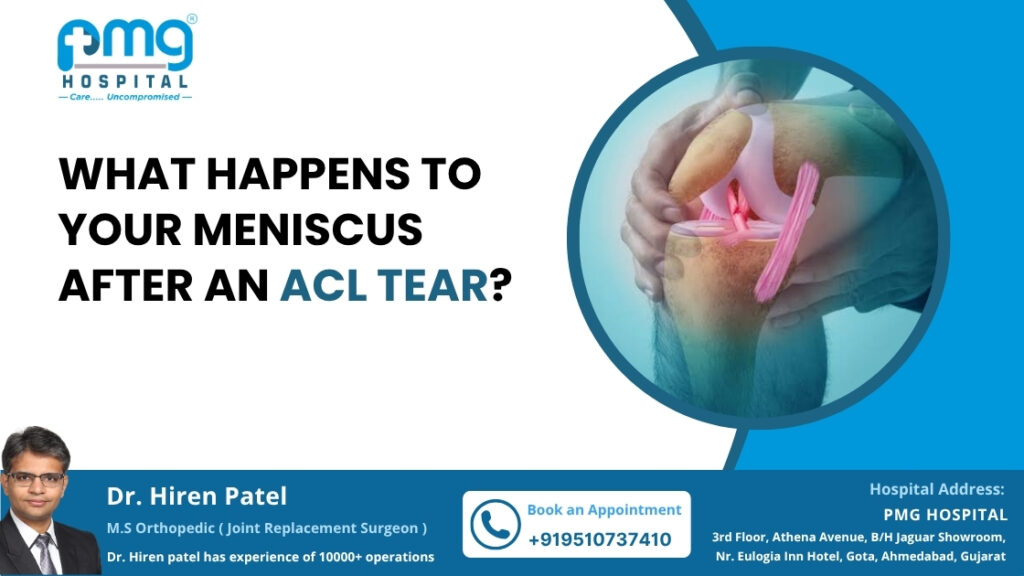
An ACL tear is one of the most common knee injuries, especially among athletes and physically active individuals. However, the ACL is often not the only structure affected. In many cases, the injury also damages the meniscus, a shock-absorbing cartilage that protects the knee joint. This is why patients frequently experience both ACL tear and meniscus injury at the same time.
If left untreated, a damaged meniscus can increase pain, reduce knee stability, and speed up joint wear. Understanding how the ACL and meniscus work together can help you recognize the importance of early diagnosis and appropriate treatment.
What Is the Meniscus?
Each knee contains two menisci – one on the inner side (medial) and one on the outer side (lateral). These C-shaped cartilage structures act as cushions between the thigh bone and shin bone.
The meniscus helps:
- Absorb shock during walking and running
- Distribute body weight evenly
- Improve knee stability
- Protect joint cartilage
- Support smooth knee movement
When an ACL tears, excessive movement inside the knee may also damage one or both menisci.
Why Does an ACL Tear Often Damage the Meniscus?
The ACL stabilizes the knee during twisting, pivoting, and sudden directional changes. Once it tears, the knee becomes unstable, allowing abnormal movement between the bones.
This instability places additional stress on the meniscus, increasing the risk of a meniscus injury after ACL tear.
The injury may occur:
- At the moment of the ACL tear
- During later episodes when the unstable knee gives way
- While returning to activity without proper treatment
Patients with ongoing knee instability are more likely to develop progressive meniscal damage over time.
Signs of an ACL Tear and Meniscus Injury
When both structures are injured, symptoms are often more severe than with an isolated ACL tear.
Common symptoms include:
- A popping sensation during injury
- Immediate swelling
- Knee instability
- Pain while twisting
- Difficulty fully straightening the knee
- Locking or catching sensations
- Reduced range of motion
Recognizing these ACL tear symptoms and treatment needs early can help prevent further damage to the knee.
Why Is the Meniscus So Important?
Many people think only the ACL needs treatment, but the meniscus plays an equally important role in protecting the knee.
A healthy meniscus:
- Reduces pressure on joint cartilage
- Improves knee stability
- Prevents excessive bone contact
- Supports smooth movement
If the meniscus remains damaged, even a reconstructed ACL may not fully restore normal knee function.
What Happens If a Meniscus Injury Is Left Untreated?
Ignoring a meniscus injury after an ACL tear can lead to long-term knee problems.
Possible complications include:
- Persistent knee pain
- Frequent locking episodes
- Ongoing swelling
- Progressive cartilage damage
- Early osteoarthritis
- Reduced athletic performance
This is why orthopedic specialists carefully evaluate both the ligament and cartilage before recommending treatment.
How Doctors Diagnose Combined ACL and Meniscus Injuries
A complete orthopedic assessment usually includes several steps.
Medical History
The doctor asks about:
- How the injury occurred
- Knee instability
- Swelling
- Previous injuries
Physical Examination
Special tests evaluate:
- ACL stability
- Meniscus tenderness
- Joint movement
- Knee alignment
MRI Scan
MRI provides detailed images of:
- ACL tears
- Meniscus damage
- Cartilage injuries
- Associated ligament injuries
Accurate diagnosis ensures that all injured structures are addressed during treatment.
How Are ACL and Meniscus Injuries Treated?
Treatment depends on:
- Age
- Activity level
- Severity of injury
- Degree of instability
- Size and location of the meniscus tear
Non-Surgical Treatment
Some patients with small, stable injuries may benefit from:
- Physiotherapy
- Activity modification
- Muscle strengthening
- Bracing
- Anti-inflammatory medication
Surgical Treatment
Patients with knee instability or significant cartilage damage often require surgery.
Modern arthroscopic ACL surgery allows orthopedic surgeons to reconstruct the ACL while treating the meniscus during the same procedure whenever appropriate.
Why Early ACL Reconstruction Helps Protect the Meniscus
One of the biggest risks of delaying treatment is repeated knee instability.
Every episode where the knee gives way places additional stress on the meniscus.
Timely ACL reconstruction surgery Ahmedabad helps:
- Restore knee stability
- Reduce additional meniscus damage
- Protect joint cartilage
- Improve long-term knee function
- Support return to sports and daily activities
Patients considering ACL reconstruction surgery Ahmedabad should undergo early orthopedic evaluation to determine the most appropriate treatment plan.
Can Combined Injuries Increase Arthritis Risk?
Yes.
An untreated ACL tear and meniscus injury may accelerate wear of the knee cartilage because the joint loses both stability and cushioning.
Over time, this can contribute to:
- Chronic pain
- Reduced mobility
- Joint stiffness
- Early osteoarthritis
Protecting both the ACL and meniscus helps preserve long-term joint health.
“Patients interested in understanding how untreated joint damage may eventually require replacement surgery can also read our article on What Happens to Your Bones During Arthroplasty Surgery?“
When Should You See an Orthopedic Specialist?
Do not ignore symptoms after a knee injury.
Consult an orthopedic specialist if you experience:
- Knee giving way repeatedly
- Locking or catching
- Persistent swelling
- Difficulty walking
- Pain while twisting
- Limited knee movement
Early diagnosis often prevents additional damage and improves treatment outcomes.
“Consulting the Best Orthopedic Doctor in Ahmedabad can help determine whether both the ACL and meniscus have been injured and whether surgical treatment is necessary.”
Tips to Protect Your Knee During Recovery
Recovery involves more than healing the ligament.
To support long-term knee health:
- Follow your physiotherapy program
- Avoid returning to sports too early
- Strengthen surrounding muscles
- Attend follow-up appointments
- Follow your surgeon’s rehabilitation timeline
A structured rehabilitation program is essential for restoring strength, stability, and confidence in knee movement.
Conclusion
A meniscus injury after an ACL tear is more common than many patients realize. Because the ACL and meniscus work together to stabilize and protect the knee, damage to one structure often affects the other. Ignoring a combined ACL tear and meniscus injury can increase the risk of chronic pain, instability, cartilage damage, and early arthritis.
Recognizing ACL tear symptoms and treatment early allows orthopedic specialists to recommend the most appropriate care. Whether treatment involves rehabilitation or arthroscopic ACL surgery, timely management plays a vital role in preserving knee function. For patients experiencing ongoing instability, consulting an expert for ACL reconstruction surgery in Ahmedabad can help restore stability, protect the meniscus, and support a safe return to everyday activities and sports.
