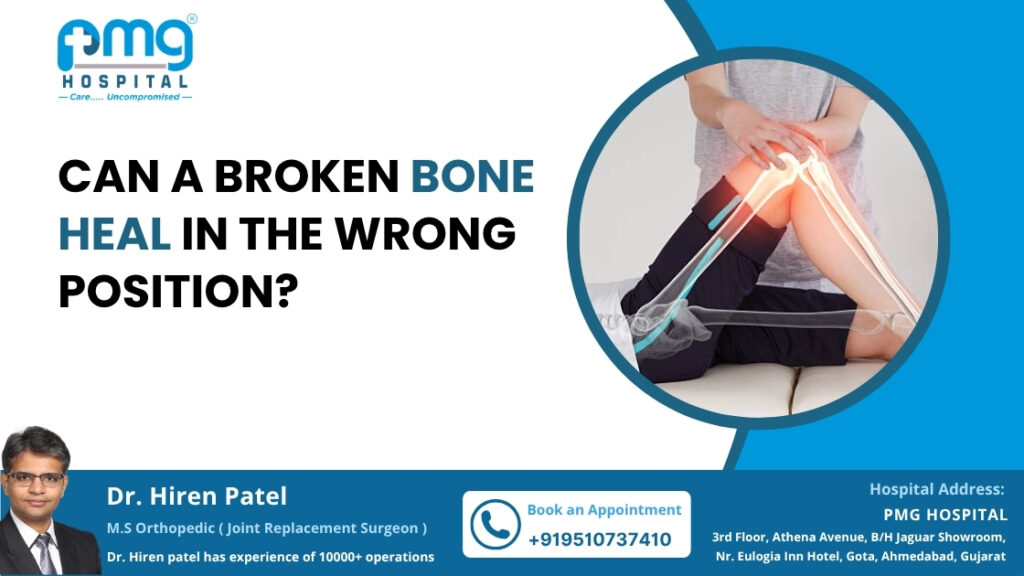
A broken bone usually begins healing soon after the injury occurs. However, healing alone does not always mean the bone heals correctly. If the fractured bone shifts out of alignment or is not properly stabilized, it can heal in the wrong position. This condition is known as malunion, and it may lead to ongoing pain, limited movement, weakness, and difficulty performing everyday activities.
Many patients ask, “Can a broken bone heal in the wrong position?” The answer is yes. Without proper diagnosis and treatment, a fracture may unite in an abnormal alignment, affecting how the bone functions for years to come.
Understanding why this happens, recognizing the warning signs, and seeking timely orthopedic care can help prevent long-term complications.
What Does It Mean When a Bone Heals in the Wrong Position?
When a fracture heals, the body naturally forms new bone tissue to reconnect the broken ends. Ideally, these bone fragments should remain in their normal anatomical position throughout the healing process.
If the fragments move before healing is complete, bone healing in the wrong position may occur. This can result in a bone that is shortened, angled, rotated, or unevenly aligned.
The severity of the problem depends on the type of fracture, its location, and the amount of displacement.
Why Can a Broken Bone Heal Incorrectly?
Several factors can increase the risk of poor bone alignment during healing.
Common causes include:
- Severe or displaced fractures
- Delayed medical treatment
- Inadequate fracture stabilization
- Premature weight-bearing
- Failure to follow rehabilitation instructions
- Complex fractures involving multiple bone fragments
Even with appropriate treatment, certain fractures are more likely to shift because of muscle pull or the natural forces acting on the injured bone.
Signs That a Bone May Be Healing in the Wrong Position
Early recognition is important because correcting the problem becomes more difficult once healing is complete.
Warning signs include:
- Persistent pain long after the injury
- Visible deformity
- Uneven limb alignment
- Difficulty walking or using the affected limb
- Limited joint movement
- Weakness during daily activities
- One limb appearing shorter than the other
If you notice these symptoms after a fracture, consult an orthopedic trauma surgeon in Ahmedabad for a detailed evaluation before permanent complications develop.
How Does Malunion Affect Daily Life?
A bone that healed incorrectly may continue functioning, but it often places abnormal stress on nearby joints, muscles, and ligaments.
Over time, patients may experience:
- Difficulty climbing stairs
- Reduced grip strength
- Problems lifting heavy objects
- Pain while walking
- Limited participation in sports
- Joint stiffness
- Changes in posture or gait
These problems may gradually worsen if left untreated.
Can Every Malunion Be Corrected?
Fortunately, many cases can still be treated successfully.
The most appropriate malunion fracture treatment depends on several factors, including:
- Age
- Overall health
- Bone involved
- Degree of deformity
- Functional limitations
- Time since the fracture healed
Mild deformities that do not interfere with function may only require observation or physiotherapy.
More severe cases often require surgical correction.
When Is Bone Fracture Surgery Recommended?
Not every fracture needs surgery. However, surgical treatment may be the best option when proper alignment cannot be maintained.
Bone fracture surgery Ahmedabad may be recommended if:
- Bone fragments are significantly displaced
- The fracture is unstable
- The fracture involves a joint
- Multiple bone fragments are present
- The bone has healed in poor alignment
- Normal function cannot be restored without surgery
Modern orthopedic techniques focus on restoring normal bone position while preserving healthy tissues whenever possible.
How Orthopedic Surgeons Diagnose Malunion
Diagnosis involves more than simply looking at an X-ray.
An orthopedic specialist will evaluate:
Clinical Assessment
- Pain location
- Limb alignment
- Walking pattern
- Joint movement
- Muscle strength
Imaging Studies
- Digital X-rays
- CT scan when necessary
- Assessment of bone healing
- Joint involvement
Accurate diagnosis helps determine whether surgery or conservative treatment is the better option.
Can Improper Bone Healing Cause Arthritis?
Yes.
When a fracture heals with poor alignment-especially around a joint-it can change how weight is distributed across the joint surface.
Over time, this uneven pressure may contribute to cartilage wear and eventually lead to post-traumatic arthritis.
Patients with joint-related fractures may also find our guide on What Happens to Your Bones During Arthroplasty Surgery? helpful for understanding how advanced joint damage is treated when replacement becomes necessary.
How to Reduce the Risk of Healing in the Wrong Position
Although every fracture is different, several steps can improve healing outcomes.
(1) Follow your orthopedic surgeon’s advice
Proper immobilization is essential during the early stages of healing.
(2) Attend scheduled follow-up appointments
Regular X-rays help ensure the fracture remains properly aligned.
(3) Avoid early weight-bearing
Putting pressure on an unstable fracture too soon may cause the bone fragments to shift.
(4) Complete your rehabilitation program
Physiotherapy helps restore strength, flexibility, and function after healing.
When Should You Seek Medical Attention?
Do not ignore persistent symptoms after a fracture.
Seek evaluation if you notice:
- Increasing deformity
- Ongoing pain
- Difficulty using the injured limb
- Reduced movement
- Delayed healing
- Difficulty walking
Early assessment often allows treatment before complications become more difficult to correct.
Conclusion
So, can a broken bone heal in the wrong position? Yes—and when it does, it can affect movement, strength, and overall quality of life. Fortunately, early diagnosis and appropriate treatment greatly reduce the risk of permanent complications.
Whether you are experiencing bone healing in the wrong position, exploring malunion fracture treatment, or considering bone fracture surgery Ahmedabad, timely evaluation is essential. Consulting an experienced orthopedic trauma surgeon in Ahmedabad ensures that your fracture heals with proper alignment, helping you regain function, reduce pain, and return to your daily activities with confidence.
