
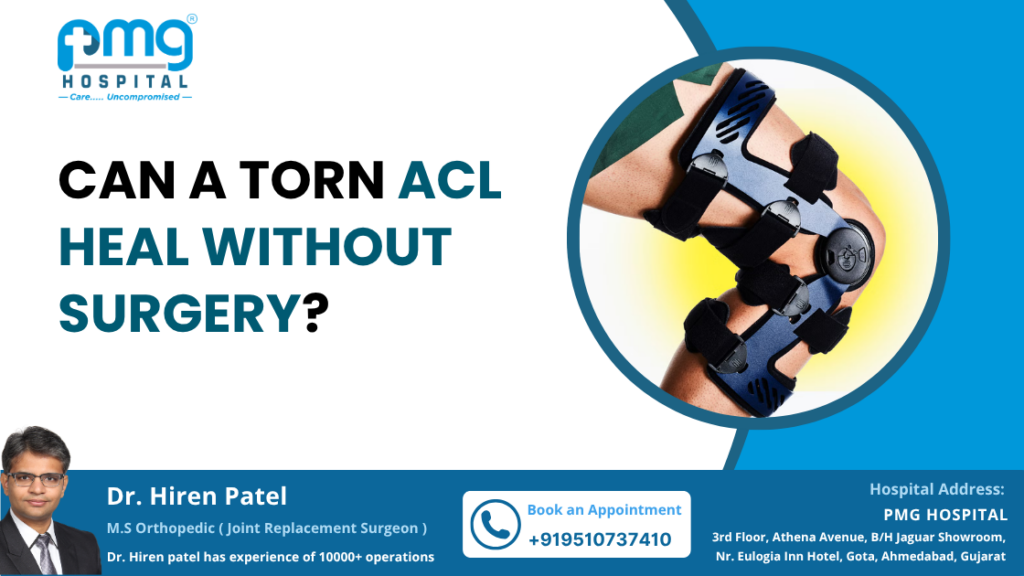
An ACL tear is one of the most common knee injuries, especially among athletes, gym enthusiasts, and people involved in sudden twisting movements. After receiving the diagnosis, many patients immediately ask: can a torn ACL heal without surgery?
The answer depends on the severity of the injury, lifestyle demands, knee stability, and overall activity level. While some mild injuries can be managed without surgery, complete ACL tears often require proper medical evaluation and long-term treatment planning.
Understanding the difference between partial recovery and true ligament healing is important before deciding whether to avoid surgery.
What Is the ACL?
The Anterior Cruciate Ligament (ACL) is a major ligament inside the knee joint. It connects the thigh bone to the shin bone and helps stabilize the knee during movement.
The ACL is especially important for:
- Running
- Jumping
- Sudden direction changes
- Sports activities
- Maintaining knee balance
When this ligament tears, the knee may become unstable and painful.
Common ACL Tear Symptoms and Treatment
Recognizing early ACL tear symptoms and treatment needs can help prevent long-term joint damage.
Common symptoms include:
- A popping sound during injury
- Sudden knee swelling
- Pain while walking
- Knee instability
- Difficulty turning or twisting
- Reduced range of motion
Some people can still walk after an ACL injury, which often creates confusion about the seriousness of the condition.
Treatment options depend on the severity of the tear and the patient’s activity level.
Can a Torn ACL Heal Without Surgery?
This is one of the most searched questions among knee injury patients. Technically, a completely torn ACL usually does not heal naturally because the ligament has limited blood supply.
However, some patients can manage symptoms without surgery if:
- The tear is partial
- Knee stability remains good
- Daily activities are not heavily affected
- The patient avoids high-impact sports
In these situations, non-surgical management may help control symptoms temporarily.
Still, many complete tears eventually require ACL reconstruction surgery for long-term knee stability.
When Non-Surgical Treatment May Work
Certain patients can manage ACL injuries without immediate surgery.
Non-surgical treatment may include:
- Physiotherapy
- Strengthening exercises
- Knee braces
- Activity modification
- Anti-inflammatory medications
This approach is more suitable for:
- Older adults with low activity levels
- Minor ligament injuries
- Patients without knee instability
- Individuals avoiding sports activity
Even when symptoms improve, regular follow-up is important to monitor knee function.
When Surgery Becomes Necessary
Although some patients delay surgery, persistent instability often creates additional problems inside the knee.
Surgery is commonly recommended when:
- The ACL is completely torn
- The knee frequently gives way
- Sports activity is important
- Meniscus damage is present
- Daily activities become difficult
In such cases, consulting the Best Knee Ligament Surgeon For ACL Reconstruction In Ahmedabad can help determine the best treatment plan.
Risks of Avoiding ACL Surgery for Too Long
Choosing non-surgical care without proper monitoring may increase the risk of complications.
Potential problems include:
- Repeated knee instability
- Meniscus tears
- Cartilage damage
- Early arthritis
- Muscle weakness
- Chronic knee pain
This is why patients with active lifestyles often choose ACL reconstruction surgery to protect long-term joint health.
What Is ACL Reconstruction Surgery?
ACL reconstruction is a procedure where the damaged ligament is replaced using a tissue graft. Modern surgery is usually performed arthroscopically using small incisions.
Benefits of ACL reconstruction surgery include:
- Improved knee stability
- Better sports performance
- Reduced risk of future injury
- Stronger knee support
- Improved confidence during movement
Patients looking for long-term recovery often prefer surgical reconstruction over temporary symptom management.
Recovery After ACL Reconstruction Surgery
Recovery takes time and proper rehabilitation.
Typical recovery stages include:
(1) First Few Weeks
- Swelling control
- Gentle movement exercises
- Pain management
(2) 1–3 Months
- Muscle strengthening
- Walking improvement
- Physiotherapy progression
(3) 4–6 Months
- Advanced rehabilitation
- Balance training
- Return-to-sport preparation
Following rehabilitation properly is just as important as the surgery itself.
Can You Live Normally with a Torn ACL?
Some people continue routine life with a torn ACL, especially if their activity demands are low. However, others experience repeated instability even during normal walking.
You may struggle with:
- Climbing stairs
- Running
- Sudden turning movements
- Sports participation
- Long periods of walking
Consulting the Best Orthopedic Doctor In Ahmedabad can help assess whether non-surgical treatment is truly safe for your knee condition.
How Doctors Decide the Right Treatment
There is no single answer for every patient. Treatment decisions depend on:
Important factors include:
- Severity of ACL tear
- Age and fitness level
- Occupation and lifestyle
- Sports participation
- Knee stability
- Presence of additional injuries
MRI scans and physical examination help orthopedic specialists determine the most suitable approach.
Tips to Protect Your Knee After an ACL Injury
Whether surgery is planned or not, protecting the knee is essential.
Helpful precautions include:
- Avoid sudden twisting motions
- Follow physiotherapy regularly
- Maintain healthy body weight
- Wear support braces if advised
- Avoid high-impact activities temporarily
These steps may reduce additional stress on the injured ligament.
Conclusion
So, can a torn ACL heal without surgery? In some partial injuries or low-activity individuals, symptoms may be managed without surgery. However, complete ACL tears rarely heal naturally and may lead to instability and long-term joint damage if ignored.
Understanding early ACL tear symptoms and treatment options helps patients make informed decisions before complications develop. While non-surgical treatment may work for some individuals, active patients often benefit more from timely ACL reconstruction surgery.
If you are experiencing knee instability or repeated pain after an injury, consulting the Best Knee Ligament Surgeon For ACL Reconstruction In Ahmedabad or the Best Orthopedic Doctor In Ahmedabad can help you choose the safest path toward recovery and long-term knee health.
